January 13, 2026
February 16, 2026
A room can feel closed off even with plenty of windows. As a solution, many homeowners consider installing skylights to increase daylight, improve airflow, and create a cleaner indoor environment. What surprises many buyers is how different skylights actually are.
According to the U.S. Department of Energy, daylighting strategies such as skylights reduce reliance on artificial lighting and lower household energy use. That benefit only holds when the skylight fits the roof and the space below it. Homeowners often turn to roofing companies in Reno when they have questions about roof compatibility.
Choosing the right option starts with understanding how skylight types work and where they perform best.
What this guide helps clarify next:
Compare Skylight Types for Your Home Now Contact Us
A skylight is a roof-installed window system designed to bring daylight and, in some cases, fresh
air into interior spaces. Unlike wall windows, skylights capture light from above, which allows it to spread more evenly across a room. Performance depends on glazing, mounting style, and the unit’s integration with the roof.
If properly selected, a skylight improves comfort without creating heat or moisture issues. When chosen poorly, it can introduce glare, leaks, or temperature swings.
Skylights deliver daylight deeper into a home than vertical windows. Light enters from above and reflects outward, reducing dark corners and reducing reliance on artificial lighting during the day. This effect matters most in interior rooms and hallways.
Operable skylights also improve ventilation. Warm air rises and escapes through the opening, which draws in cooler air from below. This passive airflow promotes fresh-air circulation without relying solely on mechanical systems.
Every skylight relies on multiple parts working together. Problems usually occur when one element fails or is mismatched with the roof.
Key components include:
Installation quality determines how these parts perform over time. Even high-quality skylight materials fall short if flashing or sealing is done incorrectly.
Not all skylights function the same way. Design, installation, and operation requirements vary, so the right option depends on how the space is used and how the roof is constructed.
The most common skylight types fall into four categories:
Fixed skylights are non-operable units designed solely to bring natural light into a space. They remain sealed at all times and do not open for airflow. This design keeps the system simple and focused on daylight delivery.
Fixed skylights are often considered traditional skylights and are commonly used as roof skylights on sloped roofs. They work well in rooms where ventilation is handled elsewhere, and consistent light matters more than airflow.
Venting skylights open manually or through electric controls to allow warm air to escape. This feature helps improve ventilation and supports indoor comfort during warmer months.
The added functionality introduces more components that must seal properly. Operable skylights typically cost more than fixed units and require careful installation to manage moisture and air movement.
Tubular skylights use a small roof-mounted dome connected to a reflective tube. Light travels through the tube and disperses into interior spaces that lack direct roof access.
These skylights prioritize function over views. Tubular skylights offer a practical way to channel natural light into small spaces such as closets, bathrooms, and hallways.
Custom skylights include specialty shapes such as pyramids, domes, and other architectural designs. These units are often specified to match a home’s layout or design goals rather than standard dimensions.
Dome skylights, pyramid skylights, and other specialty forms project light from multiple angles. Because of their size and shape, custom skylights require careful planning and roof integration.
Schedule Professional Skylight Installation Quote Get Started
Mounting style plays a major role in how a skylight performs over time. While skylight design affects light and ventilation, mounting determines how the unit integrates with the roof and manages water. The difference between deck-mounted and curb-mounted skylights lies in the installation method and roof compatibility.
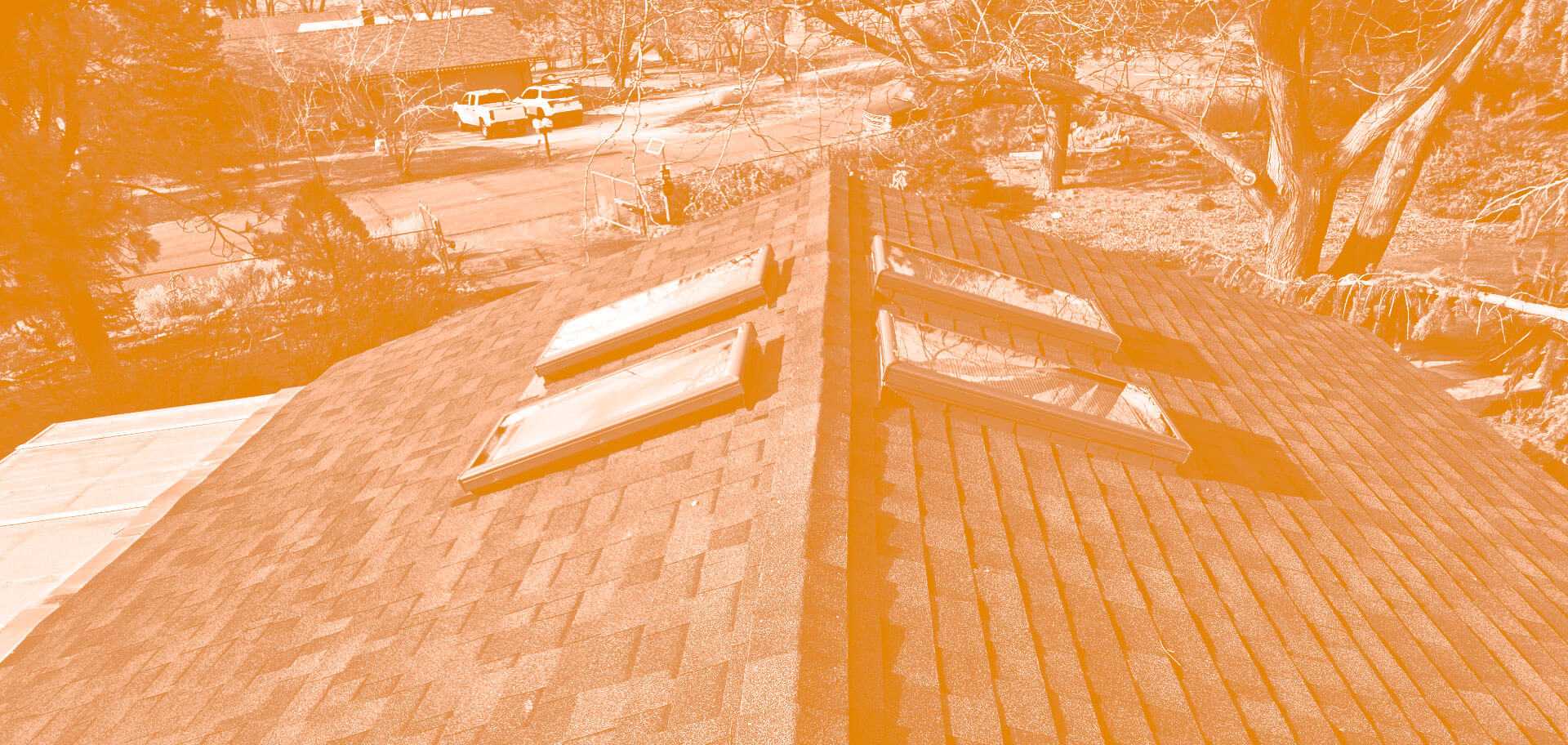
Deck-mounted skylights install directly onto the roof deck. The frame sits close to the roof surface, which creates a lower-profile appearance. These skylights are common on sloped roofs finished with asphalt shingles.
Because the unit integrates tightly with the roof, flashing accuracy matters. Deck-mounted skylights require precise installation to prevent water intrusion, especially in areas with heavy rainfall or snow accumulation.
Curb-mounted skylights sit on a raised curb built above the roof surface. This design elevates the skylight above direct water flow and adds an extra layer of separation between the opening and the roofing material.
The added height helps manage water and roof movement. Curb-mounted skylights are commonly used on flat and metal roofs, where expansion and contraction, as well as drainage, require greater flexibility.
Metal roofs behave differently from shingle systems. Panels expand and contract with temperature changes, placing additional stress on roof penetrations. Skylights installed on metal roofing must accommodate movement without breaking seals or disrupting drainage paths.
Flashing compatibility becomes more important on metal roofs. Systems that separate the skylight from direct panel movement help manage water and reduce long-term wear. Curb-mounted units are commonly used for flat-roof skylights and low-slope flat roofs, where water control is critical.
Planning matters more than product selection on metal roofs. Matching the skylight type and mounting style to the roof system helps prevent leaks and performance issues over time. This is why homeowners working with Carson roofing contractors often address skylight integration before installation begins.
Book Skylight Assessment for Your Roof Call Now
Energy performance depends heavily on selection and installation. According to the U.S. Department of Energy, poorly designed or installed windows and skylights contribute significantly to household heating and cooling loss. That risk increases when glazing, mounting, or flashing does not match the roof system. Proper design reduces energy strain instead of adding to it.
Skylights bring natural light into areas that standard windows cannot reach. Light enters from above and spreads more evenly, improving comfort and reducing reliance on artificial lighting.
When properly designed and installed, skylights support energy efficiency. Vented skylights also improve ventilation and fresh-air circulation, contributing to overall indoor comfort.
Improper selection or installation can lead to heat gain, heat loss, or moisture issues. Skylights installed without attention to roof pitch, flashing, or orientation tend to create problems over time.
Skylights also require precision during installation. Sealing, flashing, and mounting details matter more than appearance, which is why performance depends heavily on how the unit integrates with the roof.
Choosing among different types of skylights depends on how your roof and living space work together. Design matters, but performance depends on roof structure, placement, and how the skylight integrates with existing materials. The right skylight improves comfort without creating future issues.
Roof type and pitch determine which skylight options work best. Some designs integrate cleanly with sloped shingle roofs, while others perform better on flat or metal systems. Roof material often narrows the field before style comes into play.
Room size and orientation affect how light behaves throughout the day. A skylight that works well in a large living space may overwhelm a smaller room. Venting needs also vary depending on heat buildup and airflow patterns.
Local conditions also shape skylight performance. Roof pitch, snow load, and seasonal temperature swings all affect a unit’s performance over time. Homeowners weighing these factors often consult Reno roofing contractors or roofing companies in Carson City, NV when skylight choices intersect with roof structure and material compatibility.
Homeowners often have similar questions when comparing skylight options. The answers below address common concerns about skylight types, installation, and long-term performance.
The most common skylight types include fixed, venting, tubular, and custom designs. Each serves a different purpose, depending on lighting needs, ventilation, and roof structure. The right choice depends more on function than appearance.
Metal roofs usually require skylights that accommodate expansion and contraction. Curb-mounted skylights are commonly used because they separate the unit from roof movement and manage water more effectively. Flashing compatibility plays a major role in performance.
Neither option is universally better. Deck-mounted skylights sit flush with the roof and work well on sloped shingle roofs. Curb-mounted skylights offer added protection and flexibility, especially on flat or metal roofs.
Skylights can add appeal by improving natural light and interior comfort. Value depends on proper selection and installation, not on the skylight itself. Poorly installed units may have the opposite effect.
Choosing among different types of skylights is about more than appearance. The right option balances light, ventilation, and roof compatibility. When those factors align, a skylight improves comfort and adds lasting value without creating long-term roof issues.
We help homeowners make skylight decisions with the full roof system in mind. Our team understands how mounting, flashing, and roof materials work together on both shingle and metal roofs. That experience is why many homeowners contemplating Reno, NV, roofing projects trust our approach.
If you’re considering a skylight and want it done right the first time, a clear conversation helps avoid costly mistakes. We’re here to review options, answer questions, and guide the process from start to finish.
For a professional skylight consultation and dependable installation support, contact us today.